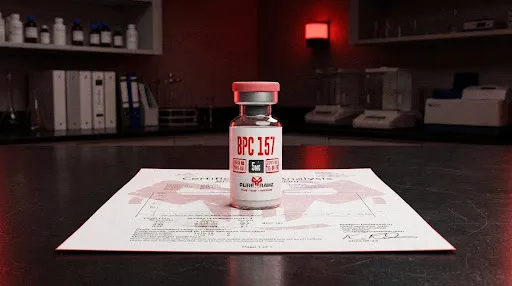
"Are peptides safe?" is one of the most common questions people type into a search bar, and for research peptides it is also one of the most misframed. The question usually carries an unspoken assumption that we are talking about putting something into a body. For research compounds, that assumption is exactly what the "research use only" designation exists to set aside. The honest, useful version of the question is different. What does responsible, safe handling of a research peptide look like in a laboratory, and what does research use only actually require of the person buying it?
This article answers that version. It does not address personal use, because research peptides are not sold for personal use, and reframing the safety question correctly is the whole point.
Why does the usual safety question not fit?
When someone asks whether a food, supplement, or medicine is safe, they are asking about consuming it. Research peptides sit in a different category entirely. They are chemical compounds sold for laboratory study, labeled not for human or animal consumption. Asking whether they are "safe" to take is a category error, like asking whether a laboratory reagent is safe to drink. The label already answers it, which is to say the question does not apply.
So the productive move is to reframe. Safety for a research compound is about laboratory practice and compliance, not about consumption. Once you make that shift, the topic becomes concrete and actionable rather than vague and fraught.
What does "research use only" actually mean?
Research use only, often shortened to RUO, is a designation that defines both what a product is and how it is meant to be handled. An RUO peptide is intended for laboratory research, for in vitro and preclinical work. It is not a food, a drug, or a cosmetic. The supplier is a chemical supplier, not a pharmacy, and the responsibility for lawful, appropriate use rests with the buyer.
That last point is the heart of it. RUO is not a loophole or a wink. It is a real set of responsibilities. When you buy a compound labeled research use only, you are accepting that it is for laboratory study and that you will handle it accordingly. A reputable supplier reinforces this by describing products in chemical and research terms and by avoiding any language about treating conditions or dosing people.
Safe handling in the lab is the real subject
Within a laboratory, "safe" has a clear and practical meaning, and it centers on protecting both the researcher and the integrity of the work.
Good laboratory practice starts with personal protective equipment appropriate to the material, such as gloves and eye protection, and with handling compounds in a suitable workspace. It includes following any safety data information provided for the compound, which describes hazards and proper handling. It means avoiding contamination, both to protect yourself and to keep your samples clean. And it means disposing of materials properly according to your institution's protocols.
These are not exotic requirements. They are the everyday discipline of working with chemical compounds, and they are what "safe" should mean when the subject is a research peptide. None of it involves consumption, and all of it is within the control of a careful researcher.
Documentation is part of safety
There is a second dimension of safety that people overlook, and it concerns knowing what is actually in the vial. A compound of uncertain identity or purity is a safety and reliability problem regardless of how carefully you wear gloves. If you do not know what you are handling, you cannot handle it well, and you certainly cannot trust your results.
This is where quality documentation earns its place in a safety discussion. A stated purity figure tells you how much of the material is the intended compound. A published certificate of analysis, tied to the specific batch, shows the HPLC and mass spectrometry data behind that claim. Third-party testing from an accredited lab adds independent confirmation. Together, these documents mean you are working with a known, characterized substance rather than an unknown.
A supplier such as peptides.com that leads with purity figures, published lab reports, and third-party testing is supporting safe research practice in this concrete sense. Knowing exactly what you have is the foundation everything else rests on, and it is impossible without real documentation.
Storage and stability tie back to safety too
Handling does not end when the package arrives. How you store a peptide affects both its integrity and the reliability of any work you do with it. Lyophilized peptides kept dry, cold, and away from light remain stable far longer than material left in poor conditions. Reconstituted peptides are more fragile and short-lived. Aliquoting to avoid repeated freeze-thaw protects the batch. Sloppy storage produces degraded material, and degraded material is both a data problem and, in the broad sense, a handling failure. Treating storage as part of responsible practice closes the loop.
The boundary, stated plainly
It is worth being direct about what this article does and does not say. It describes safe laboratory handling of research peptides and the responsibilities that come with the research use only designation. It does not say anything about personal use, dosing, or health effects in people, because research peptides are not sold for those purposes and no responsible source presents them that way. If your question about safety was really a question about taking a compound, the correct answer is that these are research materials, full stop, and that boundary is exactly what RUO is there to mark.

Reviewed by